
Pillar 2 of 5 · Exposure and foresight
See the exposure before it becomes an incident.
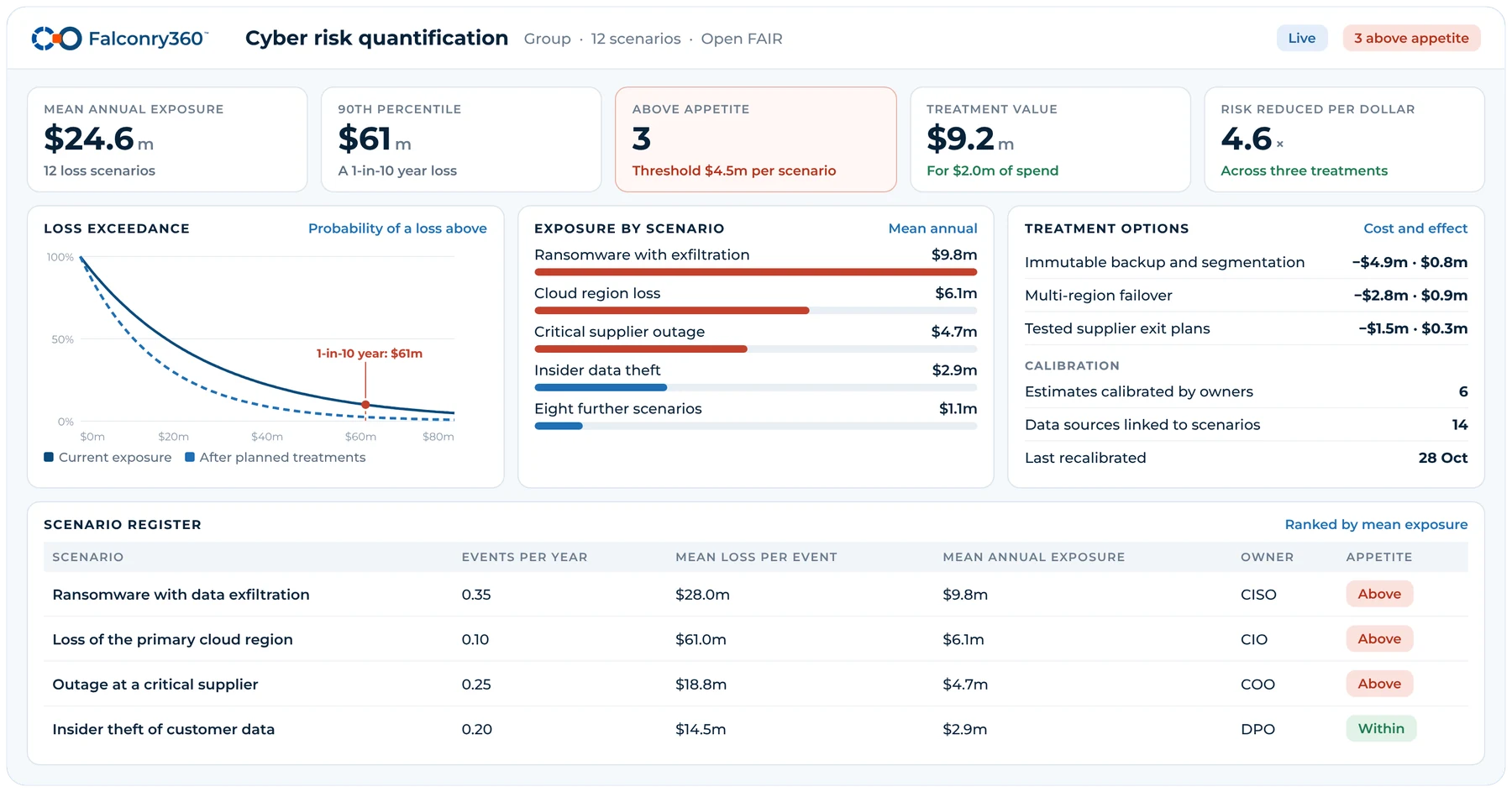
Anticipate brings asset, supplier, threat, vulnerability and scenario information into one risk picture, then quantifies the material exposure so leadership can choose a treatment.
The role lens
One record, read differently by each seat.
Take an investment decision to the Board
Use Open FAIR quantification and calibrated scenarios to compare exposure with the cost and effect of treatment.
Find where sensitive data creates concentration
Connect processing, transfers, suppliers and incidents to the scenarios that could create regulatory, customer or operational loss.
Prioritise what the estate needs next
Rank vulnerabilities, cloud concentration, technical debt and supplier dependencies by the exposure they create for important services.
See portfolio concentration, not isolated suppliers
Tier suppliers by criticality, data exposure, substitutability and fourth-party dependency, with treatments linked to contracts.
Components
What Anticipate runs on Falconry360.
Each component is a configured module in your tenant, with owners, workflows, evidence requirements and reporting.
Open FAIR risk quantification
Decompose frequency and magnitude, run simulations and keep the evidence and confidence behind every estimate.
Scenario library and calibration
Severe-but-plausible scenarios for ransomware, cloud loss, supplier outage, insider exfiltration, OT disruption and more.
Asset and service risk
Applications, infrastructure, data, OT and cloud assets assessed in the context of the services they support.
Third-party and concentration risk
Supplier tiers, data exposure, contract obligations and portfolio-level dependency and substitutability.
Threat and vulnerability intelligence
Threat and vulnerability signals linked to the assets, services and scenarios they could affect.
Emerging technology risk
AI, cloud and new-technology risks assessed before adoption, not after the first incident.
From record to routine
How the work runs, week after week.
- Discover the exposureBring in signals from assets, suppliers, incidents, intelligence and existing tools.
- Calibrate the scenarioSet assumptions with practitioners and keep the source and confidence of each input.
- Quantify and prioritiseCompare loss distributions, appetite and treatment options in one common language.
- Assign treatmentRoute the work to the owner, control, supplier or programme that can change the exposure.
- ReforecastRecalculate as controls, incidents and the estate change.
Connected by design
Anticipate gives the other pillars their signal.
Every record carries scope, authority, dates, status and evidence, so a change in one pillar shows up where it matters in the others. Select a connection.
Quantified exposure gives Govern a better investment decision and an appetite expressed in money.
Explore GovernFalconryX in Anticipate
Faster preparation. Human decisions.
FalconryX drafts and flags from approved records. A named person reviews and approves what becomes official.
Build a first-pass risk scenario
Use approved asset, incident, threat and supplier records to propose a severe-but-plausible scenario and the services it could affect.
Challenge assumptions and data gaps
Flag unsupported ranges, inconsistent inputs and missing evidence in frequency and magnitude estimates before simulation.
Connect a new signal to exposure
Suggest links from a vulnerability, threat or supplier event to assets, services, controls and existing scenarios.
Compare treatment choices
Draft the exposure removed per dollar for each treatment option, for the risk owner to challenge.
Regulatory and standards anchors
Start with the instruments you answer to.
Coverage is indicative until your perimeter is confirmed. The applicable pack, mapping and ownership are agreed during scoping and maintained as instruments change.
- Open FAIR
- ISO/IEC 27005
- NIST SP 800-30
- NIST CSF 2.0 · Identify
- MITRE ATT&CK
- NCA ECC · Risk Management
- SAMA CSF · Cyber Risk Management
- UK NCSC CAF · Objective A
Put a number behind the next risk decision.
Bring one material scenario or portfolio risk. We will show how the exposure, assumptions, controls and treatment live in one record.