
FALCONRY360 IN PRACTICE
See the operating layer behind the service.
The platform gives the client a current view of the work, not only an end-of-month report. Scope, owners, evidence and actions remain visible between service reviews.
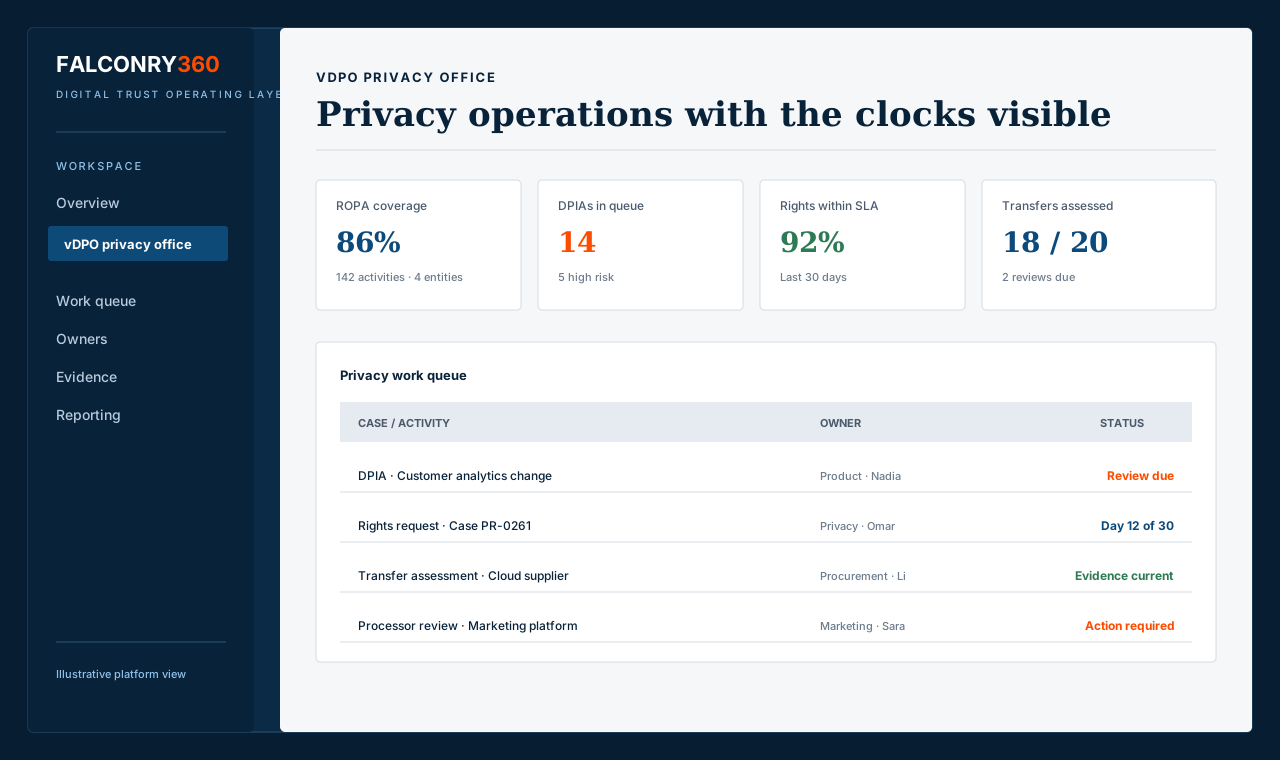 Illustrative platform view
The regional problem
A UAE group can sit under federal, ADGM and DIFC privacy law simultaneously.
Every GCC market now has a personal data protection regime, and they diverge on the points that matter operationally: lawful basis, registration or permit requirements, breach notification timescales, transfer conditions and the rights available to individuals.
A group operating across four of these markets does not need four privacy programmes. It needs one operating model where each processing activity is bound to the regime that governs it, and where the workflow adapts the clock and the conditions accordingly.
Privacy operations
- Records of processing
- A live ROPA per entity and per jurisdiction, linked to the systems, suppliers and data stores in the asset and supplier masters rather than maintained as a standalone spreadsheet.
- Lawful basis and consent
- Basis recorded per activity, consent captured with proof and withdrawal path, and legitimate interest assessments held where the regime allows that basis.
- Data subject rights
- Intake, identity verification, search across systems, redaction, response and closure, with the statutory clock for the governing regime running on the record.
- Privacy and data protection impact assessments
- Triggered by change, routed to reviewers, held against the processing and the systems assessed.
- Cross-border transfer
- Transfer register with mechanism, destination, assessment and the conditions each regime imposes — including the adequacy and permit routes used in the Gulf regimes.
- Breach management
- Assessment against each applicable regime's threshold, notification workflow with per-jurisdiction timescales, regulator and data subject communications, and post-breach actions tracked to closure.
- Retention and minimisation
- Retention schedules bound to data categories and systems, with disposal evidence.
- Vendor and processor management
- Processor obligations, contractual clauses, sub-processor chains and assurance evidence, drawing on the same supplier master used for third-party risk.
- Privacy by design
- Privacy requirements inserted into the change and project pipeline as controls, so assessment happens before deployment rather than after.
FalconryX drafts DPIAs from the change record, proposes ROPA entries from system discovery, and assembles first-draft rights responses. The DPO approves. Nothing goes to a data subject or a regulator unreviewed.