
Know what the service depends on.
Map applications, infrastructure, people, facilities, cloud and suppliers to the services the organisation must keep running.
Resilience by servicePILLAR 4 OF 5 · RESILIENCE AND RESPONSE
Withstand connects important services, impact tolerances, dependencies, continuity plans, incident playbooks and scenario tests so resilience is measured by the customer impact that matters.
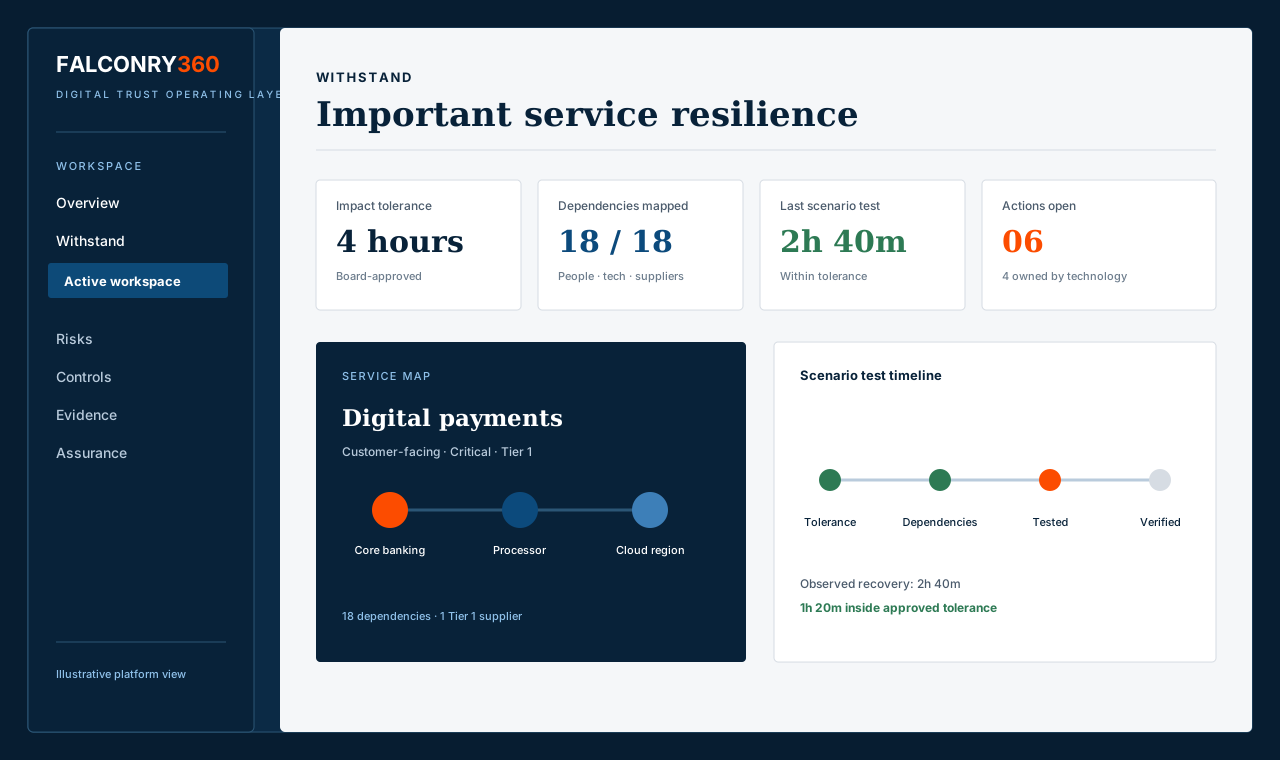 Illustrative platform view
THE ROLE LENS
Withstand gives every accountable leader the same service record, with the right view for the decision: tolerance for leadership, dependencies for technology, obligations for privacy and playbooks for response.
Map applications, infrastructure, people, facilities, cloud and suppliers to the services the organisation must keep running.
Resilience by serviceUse the same scenario library, incident record and control history to prioritise response, recovery and investment.
Cyber response with contextKeep data locations, processors, notification clocks and decision paths visible when a disruption or cyber incident becomes a privacy event.
Privacy in the playbookSee which services are outside tolerance, what was exercised, what failed and whether the remediation has been verified.
Evidence of resilienceWHAT THE PLATFORM OPERATIONALISES
Withstand moves continuity from a library of plans to a living record of services, dependencies and response decisions.
Identify services from the customer and market point of view and set maximum acceptable disruption with approved tolerances.
Map people, applications, data, infrastructure, facilities, suppliers and fourth parties against the same asset and supplier masters.
Run impact analyses, define strategies, maintain plans and track review currency against the organisation’s continuity cycle.
Record recovery capability, failover arrangements, objectives, tests and supplier commitments per important service.
Use severity, escalation, communications, notification clocks, decision logs and post-incident actions in one workflow.
Schedule table-top and live exercises, retain evidence, compare outcomes with tolerance and verify actions to closure.
FROM RECORD TO ROUTINE
A plan is only useful when the people, technology and decisions around it have been exercised.
Agree what matters, who owns it and how much disruption is acceptable.
Connect the service to the assets, people, suppliers and data that support it.
Exercise a severe-but-plausible disruption with the right decision-makers in the room.
Record what happened, what was outside tolerance and which action changes the outcome.
Retest the remediation and report resilience against the approved tolerance.
CONNECTED BY DESIGN
The scenario you quantify in Anticipate can become the exercise you run in Withstand; the gap you find can become a control action in Comply and an assurance test in Assure.
Each relationship is time-stamped and owned, so leadership can distinguish a documented capability from a tested one.
FalconryX can draft a post-incident review from the incident timeline and point to the dependencies and controls that the event actually exercised.
FALCONRYX · GOVERNED AI IN PRACTICE
FalconryX supports resilience and crisis teams before, during and after disruption by organising context and drafting materials—not by making incident or notification decisions.
A named human reviews and approves.
Use the important service, dependency map, risk record and prior exercise results to propose a focused scenario and learning objectives.
Human checkpoint · Exercise owner approvesDraft timed injects for executive, technology, privacy, communications and supplier teams against the approved exercise design.
Human checkpoint · Facilitator controls releaseCompile approved updates into a timeline, flag decision and notification clocks and prepare prompts for the accountable response team.
Human checkpoint · Incident commander decidesCompare observed recovery with tolerance, identify dependencies and controls exercised and prepare actions for review and ownership.
Human checkpoint · Leadership agrees actionsFalconryX works within tenant permissions and approved records. Sources and recommendations remain traceable, activity is logged, and no output becomes a decision, formal interpretation or assurance conclusion without named human approval.
REGULATORY AND STANDARDS ANCHORS
Coverage is indicative until the client perimeter is confirmed. The applicable pack, mapping and ownership are agreed during scoping and maintained as the instruments change.